
Roof insurance claims help homeowners pay for storm damage, leaks, and other covered repairs without absorbing the full cost. A roofing insurance claim covers damage caused by wind, hail, falling trees, and other sudden events. Filing a roof damage insurance claim requires proper documentation, professional inspections, and timely communication with your insurer. Furthermore, understanding the insurance claim for roof damage process protects you from underpayment and delays. The roof insurance claim process starts with a professional inspection and ends with completed repairs. In addition, filing a roof insurance claim correctly the first time increases your chances of full approval. A roof claim denied by your insurance company does not always mean the damage is not covered.
Likewise, a denied roof insurance claim can often be reopened with additional documentation and a second inspection. If you need help navigating your claim, search for roof insurance claims near you to find an experienced roofing contractor who works with insurers.
How Roof Insurance Claims Work
Roof insurance claims follow a specific process that involves you, your insurance company, and your roofing contractor. However, understanding each step helps you avoid common mistakes that lead to underpayment or denial.
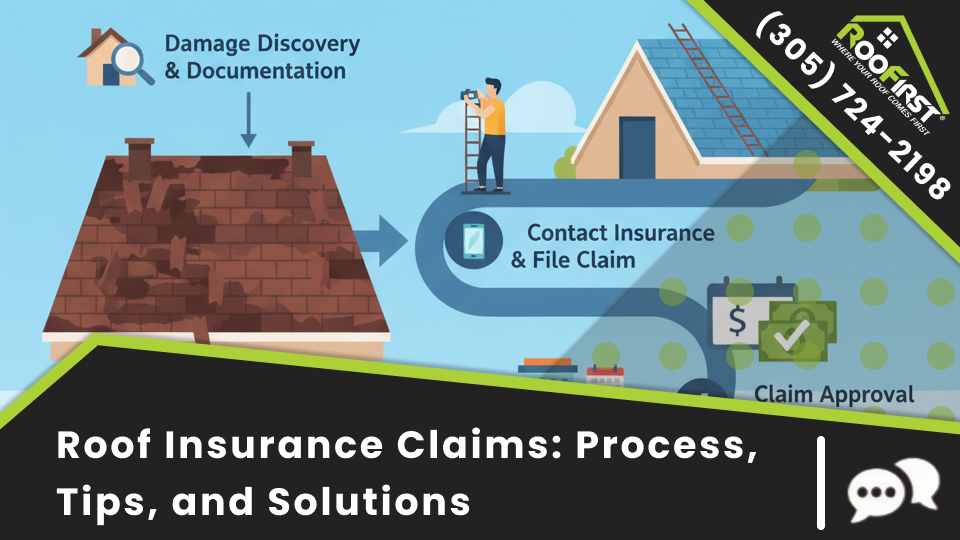
Here is how the roof insurance claim process works:
- You discover damage to your roof after a storm or weather event
- You contact your insurance company to report the damage and open a claim
- Your insurer assigns an adjuster to inspect the damage
- A roofing contractor provides an independent inspection and repair estimate
- The adjuster and contractor findings are compared to determine coverage
- Your insurer approves the claim and issues payment minus your deductible
- Your roofing contractor completes the approved repairs
Because each step requires proper documentation and communication, working with an experienced roofing contractor makes the entire roof insurance claim process smoother. Therefore, choosing the right contractor is one of the most important decisions you make during a claim.
When to File a Roof Damage Insurance Claim
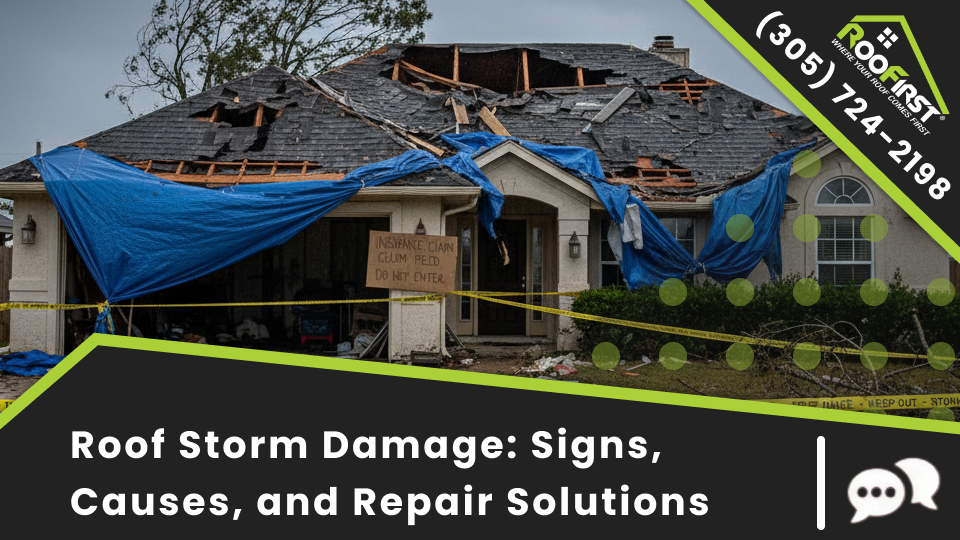
Not every roof problem qualifies for an insurance claim for roof damage. Specifically, insurance policies typically cover sudden and accidental damage rather than normal wear and aging.
Here are situations that usually qualify for a roof damage insurance claim:
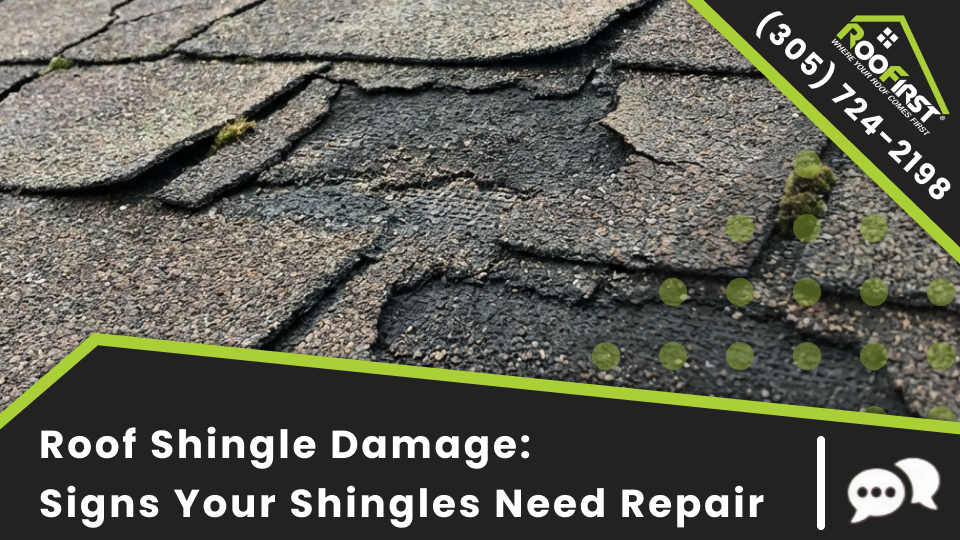
- Wind damage that tears, lifts, or removes shingles
- Hail damage that dents, cracks, or bruises roofing materials
- Fallen tree branches or debris that puncture the roof surface
- Fire damage that burns or melts roofing components
- Vandalism that intentionally damages the roof structure
- Ice dam damage in cold climates that forces water under shingles
However, these situations typically do not qualify for an insurance claim for roof damage:
- Normal aging and gradual deterioration of roofing materials
- Lack of maintenance that leads to preventable damage
- Cosmetic damage that does not affect the roof’s function
- Pre-existing damage that occurred before your current policy
Understanding what your policy covers helps you decide whether filing a roof damage insurance claim is worthwhile. Furthermore, a professional roofing contractor can assess whether your damage meets the threshold for a successful claim.
Step by Step Guide to Filing Roof Insurance Claims
Filing a roof insurance claim correctly the first time dramatically increases your chances of approval. Therefore, follow these steps carefully after discovering storm damage.
Step 1: Document the damage immediately First, take photos and videos of all visible damage from ground level. Specifically, capture missing shingles, debris in your yard, dented gutters, and any interior water stains. Furthermore, note the date and time of the storm for your records.
Step 2: Prevent further damage Next, take reasonable steps to prevent additional damage. For example, cover holes with tarps and place buckets under active leaks. In addition, save receipts for any emergency materials you purchase. Consequently, your insurance company reimburses reasonable temporary repair costs.
Step 3: Contact your insurance company Then, call your insurer to report the damage and open a claim. Specifically, provide your policy number, the date of the storm, and a description of the damage. Furthermore, ask about your deductible, coverage limits, and claim timeline.
Step 4: Schedule a professional roof inspection After contacting your insurer, hire a licensed roofing contractor to inspect your roof independently. Moreover, their detailed report and estimate provide critical documentation that supports your claim. In addition, a professional inspection often reveals hidden damage that ground-level photos miss.
Step 5: Meet with the insurance adjuster Your insurer sends an adjuster to inspect the damage in person. Therefore, have your roofing contractor present during this meeting if possible. Furthermore, the contractor can point out damage the adjuster might overlook and ensure the scope of work is accurate.
Step 6: Review and negotiate the settlement Finally, review the adjuster’s report carefully before accepting the settlement. Specifically, compare it to your contractor’s estimate. If the amounts differ significantly, you have the right to negotiate or request a reinspection.
What to Do When Your Roof Claim Is Denied
A roof claim denied by your insurance company feels frustrating. However, a denied roof insurance claim is not always the final answer. In fact, many initially denied claims are successfully overturned with the right approach.
Here are common reasons insurers deny roof insurance claims:
- The damage is classified as normal wear rather than storm damage
- The claim was filed after the policy’s reporting deadline
- The adjuster missed hidden damage during the inspection
- Pre-existing damage was not separated from new storm damage
- Required documentation was incomplete or unclear
If your roof claim is denied, take these steps:
- Request a written explanation of the denial from your insurer
- Also, have your roofing contractor provide a detailed rebuttal report with photos
- Furthermore, request a reinspection by a different adjuster
- Consider hiring a public adjuster who works on your behalf
- Additionally, file a complaint with your state’s insurance commissioner if necessary
- Finally, consult an attorney who specializes in insurance claims as a last resort
A denied roof insurance claim does not mean you have no options. Moreover, many contractors experienced with roof insurance claims can guide you through the appeals process. Consequently, persistence and proper documentation often lead to a successful resolution.
How a Roofing Contractor Helps With Insurance Claims
An experienced roofing contractor plays a critical role throughout the roof insurance claim process. Specifically, they provide services that protect your interests and maximize your claim payout.
Here is how a qualified contractor helps:
- Performs a thorough inspection that identifies all storm damage
- Also, provides a detailed written estimate that matches insurance formatting
- Furthermore, documents damage with professional photos and measurements
- Meets with the insurance adjuster to ensure nothing is overlooked
- Additionally, prepares supplemental claims if additional damage is discovered during repairs
- Finally, completes all approved repairs to restore your roof fully
Because insurance adjusters handle hundreds of claims, they sometimes underestimate damage or miss hidden problems. Therefore, having your own roofing contractor involved levels the playing field. In addition, most reputable contractors offer this service at no extra cost since they earn the repair contract.
Tips for a Successful Roof Insurance Claim
Following these tips increases your chances of a smooth and fully covered roof damage insurance claim. In fact, preparation and documentation make the biggest difference.
- File your claim as soon as possible after the storm
- Also, never sign a contract with a roofer who asks you to pay your deductible through inflated pricing
- Furthermore, get at least two independent estimates before accepting a settlement
- Keep copies of every document, photo, email, and phone record related to your claim
- Additionally, do not make permanent repairs before the adjuster inspects the damage
- Finally, choose a roofing contractor who has experience working with insurance companies
These practices protect you from underpayment, delays, and potential fraud. Moreover, working with an honest and experienced roofing contractor is the single most important factor in a successful roofing insurance claim.
When to Call a Professional
Navigating roof insurance claims requires expertise that most homeowners do not have. Therefore, contact a professional roofing contractor if any of the following apply:
- Your roof sustained damage during a recent storm or weather event
- You are unsure whether the damage qualifies for an insurance claim
- The insurance adjuster undervalued your damage or missed problems
- Your roof claim was denied and you need help appealing
- You want a professional present during the adjuster’s inspection
A roof insurance claims expert near you handles every step from inspection to completed repairs. Specifically, they document all damage, prepare accurate estimates, and work directly with your insurance company. In addition, their experience with roof insurance claims near you ensures you receive the coverage you deserve.
Do not let a complicated claims process stop you from getting your roof repaired. Instead, call today to schedule your free storm damage inspection and get expert help with your roof insurance claim.
Phone:
Email:
Website: https://co.roofirst.com/